
Membrane material and rejection are verified by pilot data
07 / SEPARATION
Concentration & Separation System
Membrane separation concentrates process materials, recovers valuable components and reduces wastewater volume.
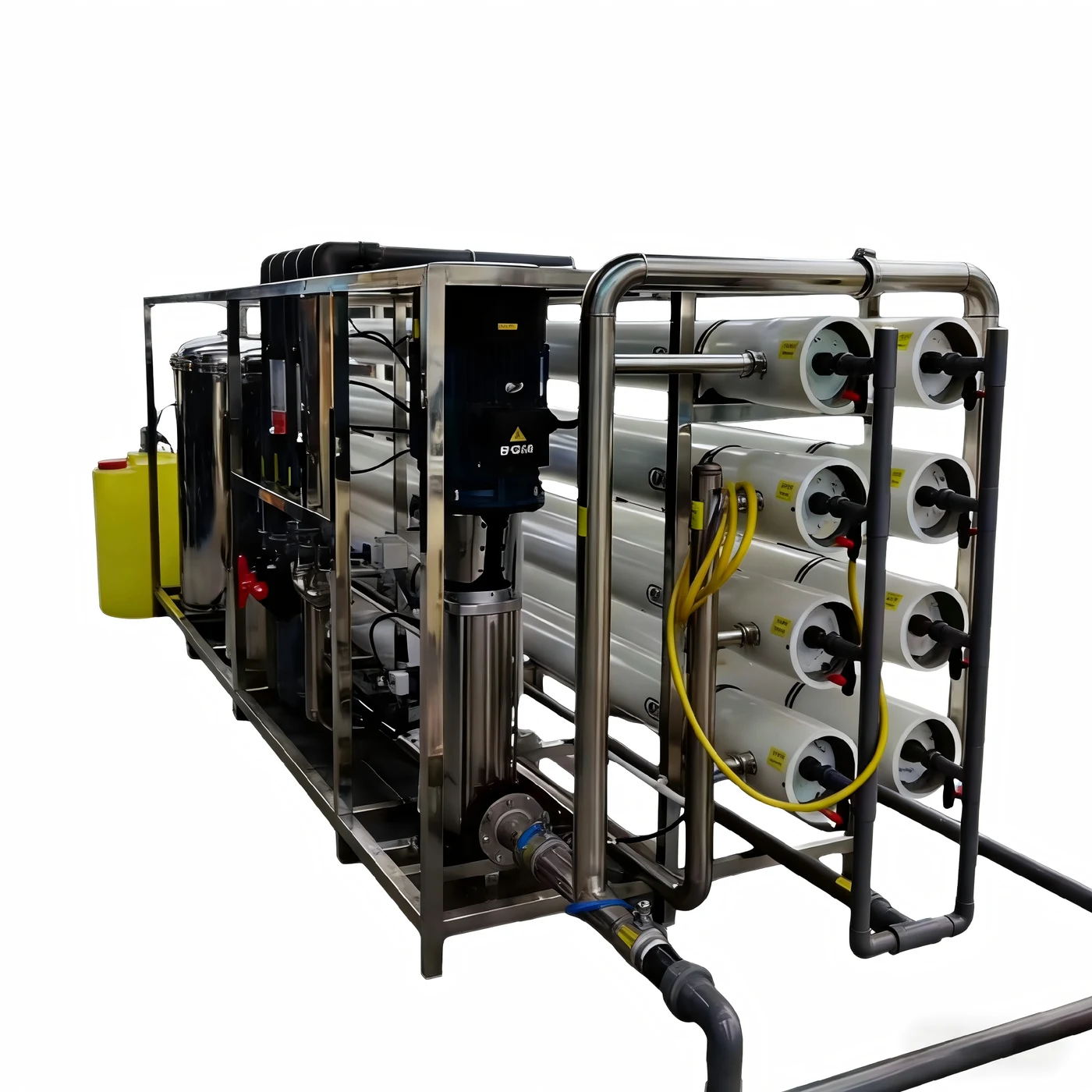
The route follows capacity and concentration target
Crossflow, temperature and cleaning determine stable flux
PROCESS ROUTE
Typical Process Route
This is a typical configuration logic, not a fixed equipment list. The final design depends on feed analysis, target requirements, capacity and site constraints.
- 01
Feed Conditioning
Remove solids and adjust temperature or pH
- 02
Membrane Screening
Select UF, NF or RO for the separation target
- 03
Crossflow Separation
Control surface velocity and fouling
- 04
Concentration Loop
Track pressure, flow and concentration
- 05
Cleaning & Recovery
Use a material-compatible cleaning plan
APPLICATIONS
Applications
Food & FermentationConcentration and component recovery
Chemicals & MaterialsSolution separation and purification
Metal ProcessingRecovery of valuable components
High-Salinity EffluentVolume reduction before downstream treatment
Pharmaceutical ProcessMaterial concentration and separation
Process-Water RecoveryRecover permeate or reusable solvent
TECHNICAL KNOWLEDGE
Technical Notes & FAQ
Clear principles, prerequisites and operating limits help determine whether a process is suitable before quotation.
Why is a pilot test usually required?
Viscosity, colloids, adsorption and fouling cannot be inferred from concentration alone. Testing confirms membrane material, stable flux, rejection and cleanability.
Does flux loss mean membrane damage?
Not necessarily. Temperature, concentration polarization, feed change and fouling all reduce flux; normalized flux, pressure drop and rejection must be reviewed together.
How is the concentration factor set?
The limit may be viscosity, osmotic pressure, solubility, crystallization or rapidly rising energy use. Mass balance and testing determine the economic endpoint.
Can one cleaning recipe be used forever?
Chemistry must match the foulant and membrane limits. pH, temperature, concentration and contact time are adjusted using cleaning recovery data.
Engineering boundary: Membrane type, rejection, stable flux and concentration factor are material-specific and require representative testing.
ENGINEERING DELIVERY
Engineering Delivery & Support
We support the full project lifecycle from process planning and manufacturing to commissioning and after-sales service.
Process Design
Define the process route and equipment selection from water quality, capacity, targets and site constraints.
Manufacturing
Modular assembly, quality inspection and factory testing against the approved design.
Installation & Commissioning
Site installation, integrated commissioning, operating optimization and operator training.
After-Sales Support
Ongoing technical support, consumables and troubleshooting, with a 24-hour response to after-sales issues.
START YOUR PROJECT