
Working capacity is calculated from feed hardness and resin volume
04 / SOFTENER
Water Softener
Ion exchange removes calcium and magnesium hardness, reducing scale risk in boilers, heat exchangers, membrane systems and process piping.
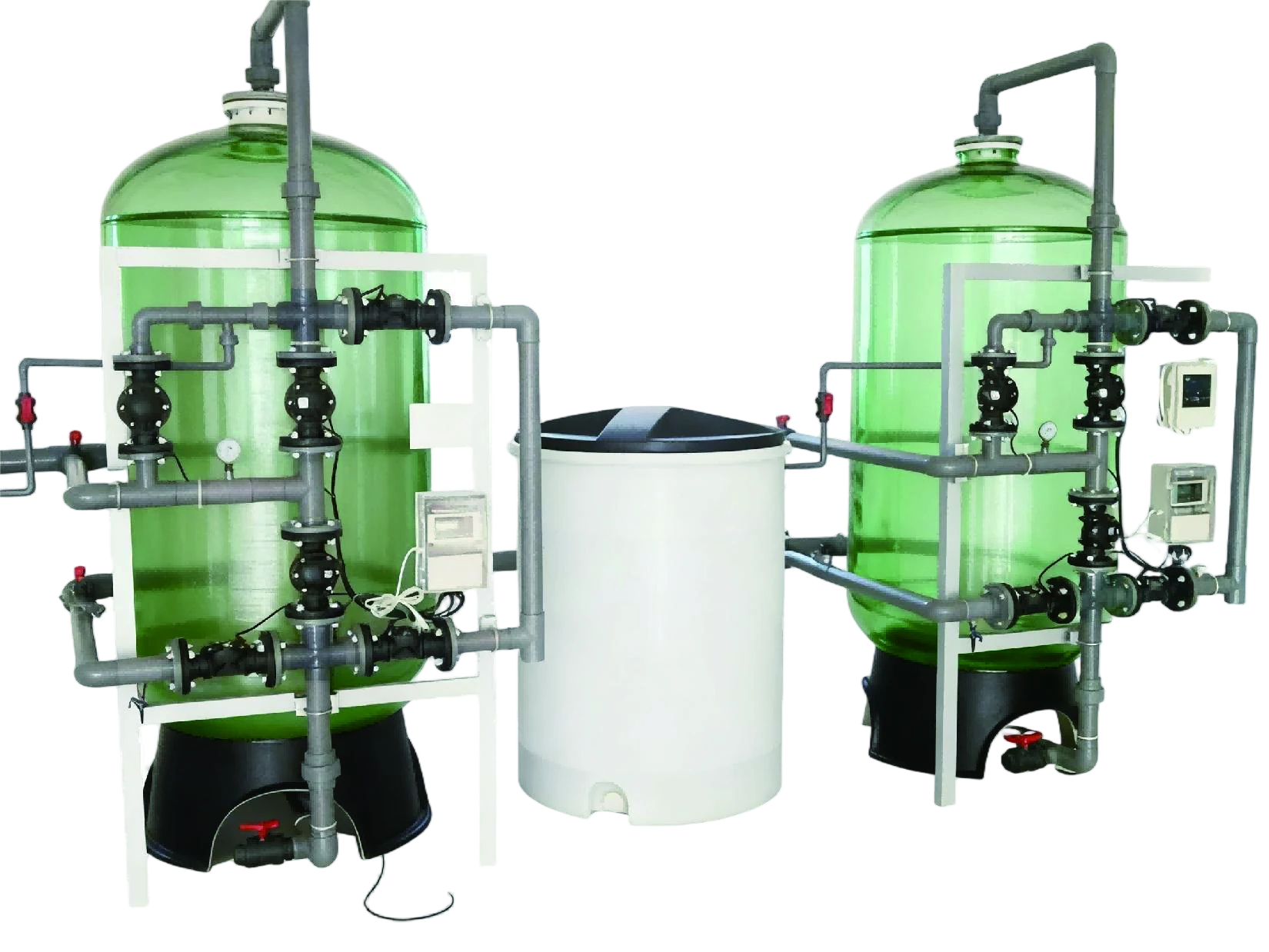
Duplex duty/standby operation supports continuous supply
Salt dose and rinse sequence are set to actual loading
PROCESS ROUTE
Typical Process Route
This is a typical configuration logic, not a fixed equipment list. The final design depends on feed analysis, target requirements, capacity and site constraints.
- 01
Prefiltration
Control solids and protect the resin bed
- 02
Ion Exchange
Sodium-form resin exchanges calcium and magnesium
- 03
Soft-Water Supply
Deliver water while totalized flow is monitored
- 04
Brine Regeneration
Restore the resin exchange capacity
- 05
Slow/Fast Rinse
Displace regenerant before returning to service
APPLICATIONS
Applications
Boiler Make-UpReduce scale and blowdown load
RO PretreatmentControl hardness loading to membranes
Heat-Exchange LoopsReduce scale on heat-transfer surfaces
Process CleaningStable low-hardness utility water
Hotels & Hot-Water SystemsReduce scale in heaters and piping
General ManufacturingUtility water for hardness-sensitive processes
TECHNICAL KNOWLEDGE
Technical Notes & FAQ
Clear principles, prerequisites and operating limits help determine whether a process is suitable before quotation.
Why does a softener need salt?
Calcium and magnesium occupy exchange sites during service. Brine restores the resin to its sodium form; the salt is used for regeneration, not dosed directly into product water.
Single or duplex vessel?
A single vessel suits sites that can tolerate a regeneration interruption. Continuous production normally requires duplex alternating service, also checked against peak flow to prevent hardness leakage.
What causes sudden hardness leakage?
Check bypass valves, brine level, injector operation, regeneration sequence and peak flow first. Resin fouling, channeling or iron contamination may require internal inspection.
Is pretreatment necessary?
High turbidity, iron, manganese, organics or oxidants can foul or damage resin. Pretreatment is selected from the actual feed-water analysis.
Engineering boundary: Product hardness, regeneration frequency and salt consumption depend on feed hardness, flow, resin volume and operating mode.
ENGINEERING DELIVERY
Engineering Delivery & Support
We support the full project lifecycle from process planning and manufacturing to commissioning and after-sales service.
Process Design
Define the process route and equipment selection from water quality, capacity, targets and site constraints.
Manufacturing
Modular assembly, quality inspection and factory testing against the approved design.
Installation & Commissioning
Site installation, integrated commissioning, operating optimization and operator training.
After-Sales Support
Ongoing technical support, consumables and troubleshooting, with a 24-hour response to after-sales issues.
START YOUR PROJECT